Tired of watching your parents struggle with restless nights? This app brought them peace—and gave us all better sleep
Many of us have seen it: a parent or grandparent tossing and turning, waking up exhausted, yet insisting they’re “fine.” Poor sleep in older adults often goes unnoticed, but it affects everything—mood, memory, even heart health. I felt helpless—until I discovered a simple app that quietly transformed my parents’ nights. It didn’t demand lifestyle changes or complex routines. Just gentle tracking, smart insights, and peace of mind for the whole family. What started as a small experiment became a lifeline—not just for their rest, but for our shared days, our conversations, and our peace of mind.
The Silent Struggle: When Sleep Becomes a Hidden Problem in Older Age
Have you ever sat across from your mom at breakfast and noticed how her eyes struggle to stay open? Or watched your dad drift off mid-sentence during a family chat, only to wake up confused and apologetic? These moments aren’t just signs of aging—they’re often symptoms of something deeper: poor sleep. And yet, so many older adults brush it off. “I’ve always been a light sleeper,” they say. Or, “I just need less rest these days.” But the truth is, quality sleep never becomes optional. It’s as essential at 70 as it is at 20.
I remember visiting my parents last winter. My mom kept getting up in the middle of the night, pacing the hallway, or checking the stove—even though dinner had been hours ago. She’d come back to bed, but I could tell she wasn’t really sleeping. The next day, she was irritable, forgetful, and tired in a way that no amount of coffee could fix. At first, I thought it was stress. Then I started wondering: what if it wasn’t just fatigue? What if her body wasn’t getting the rest it truly needed?
Sleep issues in older adults are often invisible. They don’t always come with loud snoring or dramatic insomnia. Instead, they show up as restlessness, early waking, or that foggy, disconnected feeling in the morning. And because many seniors adapt to these changes, they don’t see them as problems. But the impact is real. Chronic poor sleep is linked to higher risks of cognitive decline, weakened immunity, and even heart disease. It can make someone more prone to falls, less able to manage medications, and less present in their own life. For families, it’s heartbreaking. We want our parents to enjoy their golden years, not spend them drained and disconnected.
What makes it harder is that they often don’t ask for help. There’s a quiet pride in many older adults—the belief that they should handle things on their own. Admitting they’re struggling with sleep can feel like admitting weakness. And so, the cycle continues: restless nights, tired days, growing worry in the hearts of their children. We watch, we worry, but we don’t know what to do. That feeling of helplessness? I know it well. But what if there was a way to support them—not by taking over, but by offering a gentle, invisible kind of care?
Why Traditional Advice Falls Short for Seniors
We’ve all heard the usual tips: go to bed at the same time every night, avoid screens before bed, skip the afternoon coffee. And for many people, these habits do help. But when it comes to older adults, the body doesn’t always follow the rules. I remember trying to help my dad by giving him a sleep hygiene checklist—no naps, no TV after 8 PM, warm milk before bed. He tried it for a week. Then one morning, he handed it back with a quiet smile and said, “I appreciate it, sweetheart, but I just don’t feel tired when I’m supposed to.”
And he was right. As we age, our circadian rhythm changes. The internal clock that tells us when to feel alert and when to wind down shifts earlier. Many seniors naturally feel sleepy by 8 or 9 PM, but then wake up at 3 or 4 AM, unable to fall back asleep. It’s not laziness or poor discipline—it’s biology. Add to that the effects of medications (like those for blood pressure or arthritis), chronic pain, or conditions like sleep apnea, and it’s no wonder that one-size-fits-all advice often falls flat.
I once read an article that said, “Older adults need less sleep.” That’s a myth. What changes isn’t the need for sleep—it’s the ability to achieve it. And when well-meaning suggestions don’t work, it can lead to frustration on both sides. The adult child feels ignored. The parent feels misunderstood. I know that tension. I felt guilty for pushing too hard, then guilty for not doing enough. But what if, instead of trying to fix their habits, we could simply understand what’s really happening at night?
That’s when I started looking for solutions that didn’t ask my parents to change who they were. I didn’t want them to force themselves into routines that didn’t fit. I wanted something that worked with their life, not against it. Something gentle. Something quiet. Something that didn’t feel like another chore or another thing they were “failing” at. That’s how I found sleep-tracking apps designed specifically for older adults—not as a replacement for care, but as a tool to make care smarter, kinder, and more informed.
A New Kind of Helper: How Sleep Apps Are Designed for Real Life
When I first heard about sleep-tracking apps, I pictured something complicated—devices to wear, settings to adjust, data to analyze. I assumed my parents would hate it. But the ones I found were different. These aren’t apps built for fitness enthusiasts or data geeks. They’re made for real people living real lives—especially those who didn’t grow up with smartphones. The best ones are simple, intuitive, and almost invisible in daily use.
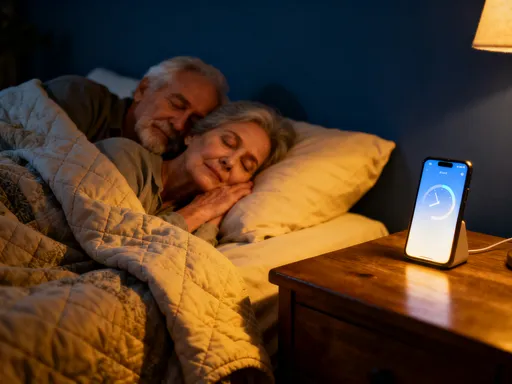
One app I tested doesn’t require wearing anything. You just place your smartphone on the nightstand, or use a small sensor under the mattress. It uses sound and motion detection to monitor breathing patterns, movement, and sleep stages—all without disturbing sleep. The interface is clean, with large text and clear icons. Some even offer voice support, so if my mom forgets how to check her sleep score, she can just say, “Hey, how did I sleep last night?” and the app responds out loud.
What surprised me most was how little setup was needed. I helped my parents install it during a weekend visit. We spent about 15 minutes going through the basics—naming the device, choosing a wake-up sound, turning on notifications for unusual patterns. Then we left it running. No daily logs. No complicated settings. Just peace of mind.
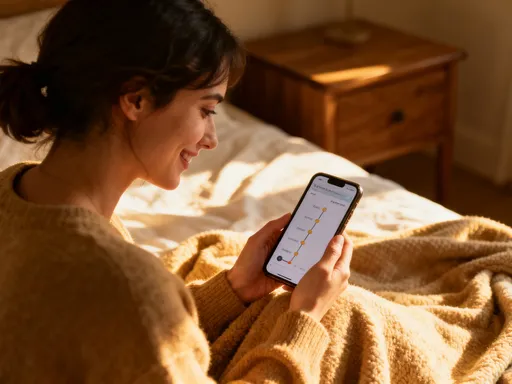
Think of it like a quiet nighttime companion. It doesn’t judge. It doesn’t nag. It just watches, learns, and gently alerts you if something seems off. For my dad, who values his independence, it wasn’t an intrusion—it was a safety net. He didn’t have to report how he felt each morning. The app already knew. And for me, it meant I didn’t have to call every day and ask, “Did you sleep okay?” I could see, in a simple color-coded graph, whether his night was restful or restless. That small change lifted a weight I didn’t even know I was carrying.
What These Apps Actually Do—And Why It Matters
You might be wondering: what exactly does a sleep app do that’s so helpful? It’s not magic, but it is powerful. At its core, it tracks patterns—how long it takes to fall asleep, how often you wake up, how much time you spend in deep sleep versus light sleep. But for older adults, the real value is in what it can catch before it becomes a crisis.
Take breathing, for example. Many seniors experience changes in breathing during sleep—pauses, irregular rhythms, or shallow breaths—without realizing it. These can be early signs of sleep apnea, a condition that’s more common with age and can increase the risk of stroke or heart problems. One night, the app sent me an alert: “Unusual breathing pattern detected.” I didn’t panic, but I did call my mom the next morning. She hadn’t noticed anything wrong, but when I asked if she’d been feeling more tired than usual, she admitted she had.
We brought the data to her doctor. Not guesses. Not vague descriptions. Actual patterns from the past two weeks. The doctor was impressed. He said the app had flagged something subtle but significant. My mom started a simple treatment—and within days, her sleep improved. More importantly, we caught it early, before it could lead to bigger issues.
Another feature that made a difference was the smart alarm. Instead of jolting my dad awake at 7 AM sharp, the app waits for a light sleep phase within a 30-minute window. He wakes up more naturally, less groggy, and actually remembers his dreams. It sounds small, but it changed his mornings. He started taking walks again. He read the newspaper without dozing off. And he smiled more.
These apps don’t cure anything. But they do something just as important: they bring awareness. They turn invisible struggles into visible insights. And that makes all the difference when it comes to taking the next step—whether it’s a doctor’s visit, a change in routine, or simply feeling seen and supported.
Making It Work: How to Introduce the App Without Resistance
I’ll be honest—the biggest challenge wasn’t the technology. It was the conversation. How do you suggest a sleep app to a parent without making them feel like you think they’re failing? I worried my dad would see it as an accusation: “You’re not sleeping well, so I’m spying on you.” That fear is real for many of us. We don’t want to undermine their independence or make them feel like a burden.
So I changed my approach. Instead of saying, “You need this,” I said, “I found something that helped me feel less worried.” I framed it as a gift—not of correction, but of care. I told him, “I keep wondering how you’re sleeping, and it keeps me up too. What if we tried this together? Not because you’re doing anything wrong, but because I want to stop guessing and start knowing—so I can relax.”
Here’s how that conversation actually went:
Me: “Dad, I read about this app that tracks sleep—no wearing anything, just your phone on the nightstand. I thought it might help me stop worrying so much about you at night.”
Dad: “You worry too much.”
Me: “I know. But wouldn’t it be nice if I could just see that you slept well, instead of imagining the worst?”
Dad: “Hmm. Does it beep or something?”
Me: “Nope. It’s quiet. It just tells me if something’s off—like if you’re up a lot or your breathing changes. Then I’d know when to call, instead of bothering you every morning.”
Dad: “Well… if it keeps you from calling at 7 AM, I’m in.”
We both laughed. But the point was made. By focusing on my own peace of mind, not his shortcomings, I made it about love, not control. We set it up together. I showed him how to check his sleep score in the morning. He liked seeing the little graph—“Looks like I had a good night,” he’d say. It became a conversation starter, not a source of tension.
The key? Start small. Don’t demand a week of data. Try one night. Show interest, not pressure. And let them see the benefit for themselves. For my parents, the turning point was realizing the app wasn’t watching them—it was watching over them.
The Ripple Effect: Better Sleep, Stronger Family Bonds
When my mom started sleeping better, it didn’t just change her nights. It changed our days. She had more energy to cook, to garden, to plan outings with the grandkids. She wasn’t just present—she was engaged. I remember one Sunday dinner where she told a story from her childhood, laughing so hard she cried. It was the first time in months she’d had the focus and joy to share something like that.
And it wasn’t just her. Our whole family felt lighter. My brother stopped asking, “Is Mom okay?” every time he called. My kids loved having Grandma join their walks to the park without needing to rest every few minutes. Even my dad seemed more patient, more talkative. Better sleep didn’t just improve their health—it restored their connection to life, and to us.
I didn’t realize how much I’d been holding onto—how much of my mental space was taken up by quiet worry—until that worry began to fade. I could finally enjoy visits without scanning their faces for signs of exhaustion. I could laugh with them, not at them, when they joked about naps. The app didn’t fix everything, but it gave us something priceless: the freedom to just be together, without fear.
And in a way, it brought us closer. We started talking more about health, not as a scary topic, but as something we could navigate together. We shared sleep tips, compared scores, celebrated good nights. It became a small ritual, a quiet way of saying, “I care.” That’s the real gift—not just better rest, but deeper connection.
A Future Where Care Feels Effortless—And More Human
Technology often gets a bad reputation when it comes to aging and care. We hear fears about robots replacing human touch, about cold machines taking over what should be personal. But my experience has taught me something different. When used with intention and love, technology doesn’t replace caregiving—it enhances it. It gives us better tools to love well, to protect quietly, to support without smothering.
The sleep app didn’t take my role as a daughter. It simply gave me more clarity, more confidence, and less anxiety. It didn’t make my parents dependent. It helped them stay independent longer, with a safety net they didn’t even feel. And it didn’t create distance. It deepened our bond by removing the unspoken fears that had built up between us.
I used to think caring meant doing everything myself—calling every day, showing up unannounced, constantly checking in. But now I see that true care can also mean stepping back, trusting the process, and using tools that let love breathe. The app didn’t replace my presence. It made my presence more peaceful.
Looking ahead, I hope more families discover this quiet kind of support. Not flashy gadgets, but gentle, thoughtful tools that honor dignity and independence. Because aging shouldn’t mean losing sleep—or connection. It should mean being seen, being cared for, and being able to enjoy each day with energy and joy. With the right support, it can.
So if you’ve been lying awake, wondering how your parent is really doing tonight, know this: you’re not alone. And you don’t have to carry that worry in silence. There are kinder, smarter ways to care. Ways that don’t ask your parents to change who they are. Ways that bring peace—for them, and for you. Because at the end of the day, the greatest gift we can give our loved ones isn’t perfection. It’s peace. And sometimes, that peace comes in the form of a simple app, quietly working through the night, so everyone can wake up a little more rested, a little more connected, and a lot more at ease.